
Y2K >> EA >> AI
Big Picture Thinking In The Age Of AI.

I started my career in the late 90s. A couple of years before the world learned the phrase Y2K. Everyone talked about the end of computers as we knew them. People stocked up on canned food. News anchors treated midnight like a countdown to judgment day. I was a junior engineer who fixed servers and swapped tapes. The boardroom discussions about strategy felt pointless to me. I wanted to do real work.
Then the digital world started to move fast.
1999 had Y2K panic.
2001 gave us the dot-com crash.
2004 brought Web 2.0.
2007 changed everything with the iPhone.
2010 started the cloud rush.
2015 turned data into a business currency.
2020 accelerated remote work.
2023 AI exploded right after.
Every event pushed the industry into a new direction. Every shift forced engineers to think beyond systems and hardware. But in the late 90s, I could not see any of that. I thought technology progressed in straight lines. The senior architects in those meetings tried to talk about alignment, risk, and long term direction. I thought they wanted to avoid keyboards.
I stayed focused on the rack in front of me. The pager on my belt. A switch that needed a reload. That was my bubble.
With time, the world got more complex. New platforms brought new patterns. New languages, new data shapes, new security problems. Your own job expands even when you are not paying attention. You start to notice how one quick fix slows another team for weeks. You notice how a decision on storage impacts analytics. You notice how a design shortcut creates policy issues. You notice how small choices turn into big fires.
This is when the big picture starts to matter.
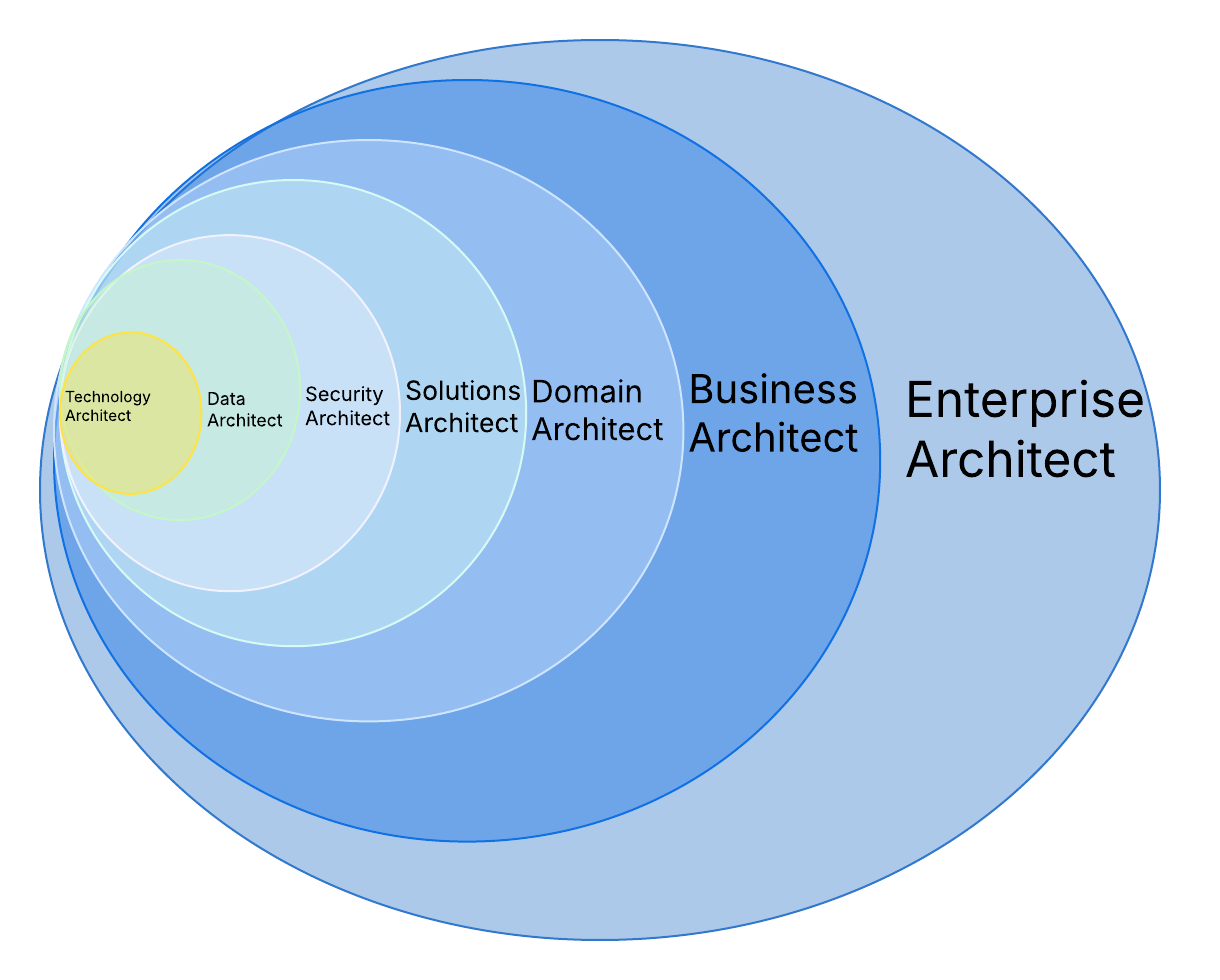
That is what the diagram represents. Circles that grow with responsibility. Not job titles. Horizons.
Technology Architect stays close to systems.
Data Architect stays close to flows.
Security Architect protects surfaces.
Solutions Architect connects parts.
Domain Architect aligns a full capability.
Business Architect aligns money, process, and scale.
Enterprise Architect keeps everything coherent so the company does not collapse under its own weight.
If you lived through the last 25+ years of digital change, you have already seen this structure in action.
Y2K forced the industry to think in systems.
The dot-com collapse forced teams to design for value.
Web 2.0 forced solutions to scale fast.
Mobile forced new domain thinking.
Cloud forced architecture discipline.
Data growth forced stronger models and governance.
Remote work forced security patterns.
AI is now forcing enterprise-wide alignment.
Every shift matched one layer of these circles. The bigger the global change, the bigger the circle you need to stand in.
The frameworks out there only describe this growth.
TOGAF turns the circles into domains.
Zachman turns them into viewpoints.
Gartner turns them into layers.
ISO 42010 turns them into stakeholders.
SAFe gives you alignment and business context.
The labels are different. The idea is the same.
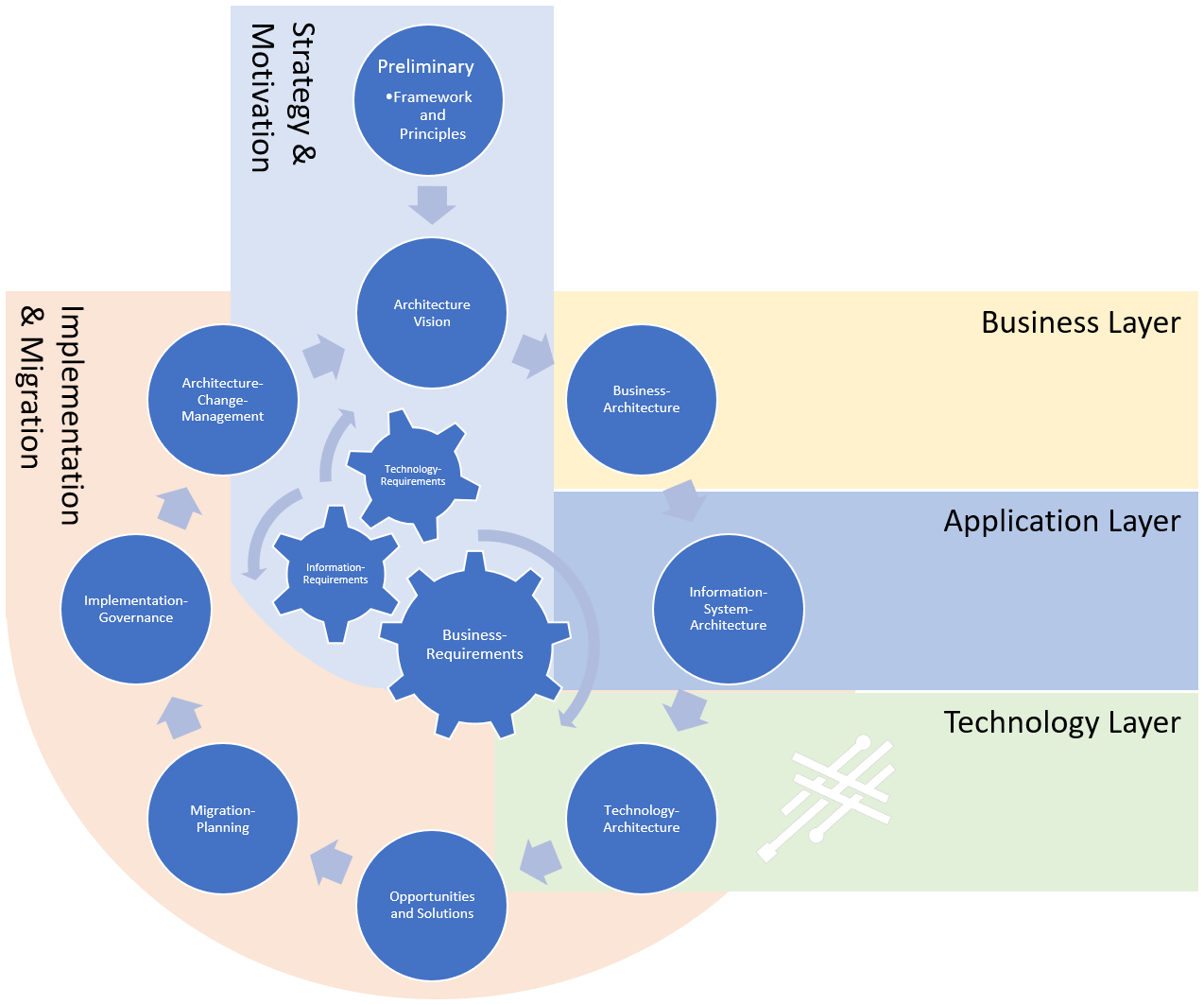
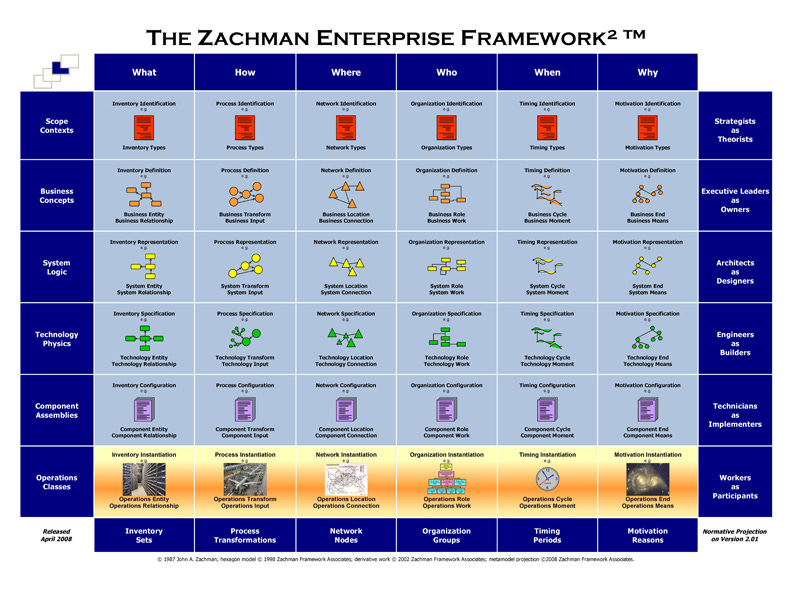
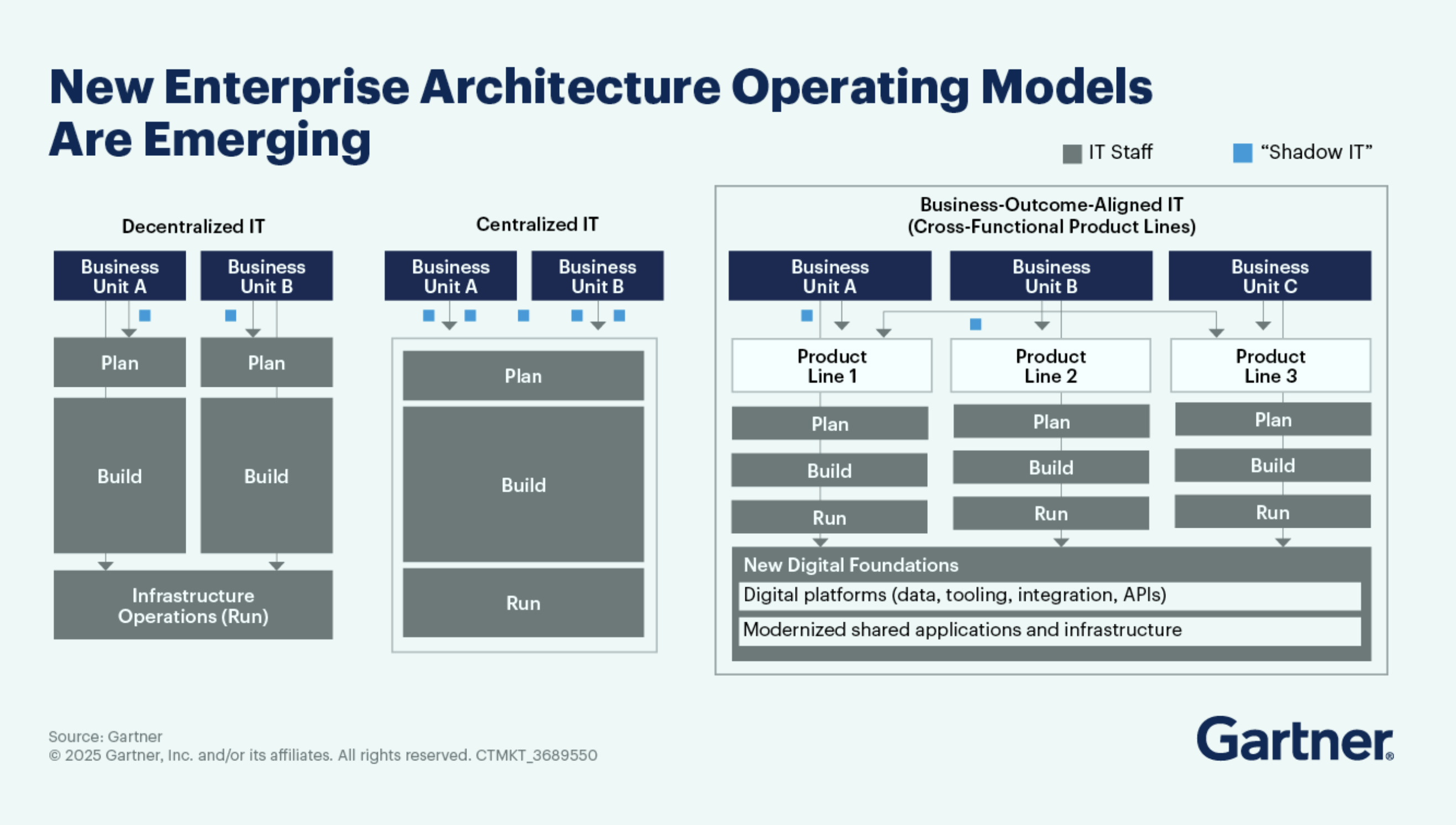
You can use any framework as long as you understand the theory behind it. Architecture is not about paperwork. It is about making sure your decisions support the next ten years, not only the next ten minutes.
The diagram, at the top of the page, fits all of them. The names are different. The logic is the same. You scale from component thinking to enterprise thinking. You scale from systems to strategy.
In the early days, I ignored these ideas. Now I use them to navigate every decision. The frameworks help, but they are not the point. The point is understanding the theory and the goal. You can follow TOGAF, Zachman, or Gartner. It does not matter. What matters is the mindset behind the circles. You start small. You grow your scope. You learn to see the whole picture.
That picture looked annoying in the late 90s. Now it looks necessary.
AI killed the EA star?

People say enterprise architecture is dead. They point to AI tools, LLMs, auto coders, auto designers, and automatic everything. The idea is simple. If AI can generate systems, then architects are no longer needed.
The reality is different.
AI can generate patterns. It cannot generate purpose. You still need a strategy. You still need capability planning. You still need alignment between business goals and technology outcomes. No model can replace that today.
AI can optimize code. It cannot own accountability. It cannot manage risk. It cannot negotiate tradeoffs across finance, operations, security, and product teams.
AI can suggest architectures. It cannot pick the one that fits your culture, constraints, budget, or politics.
AI can generate documentation. It cannot set direction for a five-year roadmap that balances compliance, cost, experience, and resilience.
People talk about autonomous strategy systems. That is still a pipe dream. You need AGI-level reasoning for that. You need context, judgment, and long-horizon thinking. LLMs do not have that. They predict. They do not understand.
Frameworks are not dying. Frameworks are boring, but they keep teams aligned. They tell you how to think. They tell you how to structure decisions. You can use TOGAF, Zachman, Gartner, or anything else. The names do not matter. The logic does.
You still need a way to translate business goals into capabilities. You still need a way to manage complexity. You still need a way to control entropy in large systems.
AI helps. AI accelerates. AI supports. AI does not lead.
Enterprise architecture stays alive because someone still has to organize the chaos. AI is nowhere near ready for that role. Not today. We are working with ANI, which predicts text and patterns, not a system that understands consequences or long-horizon strategy. AGI is still a distant finish line, full of research problems and half-baked hopes. Until we reach that level, the strategy work stays human.
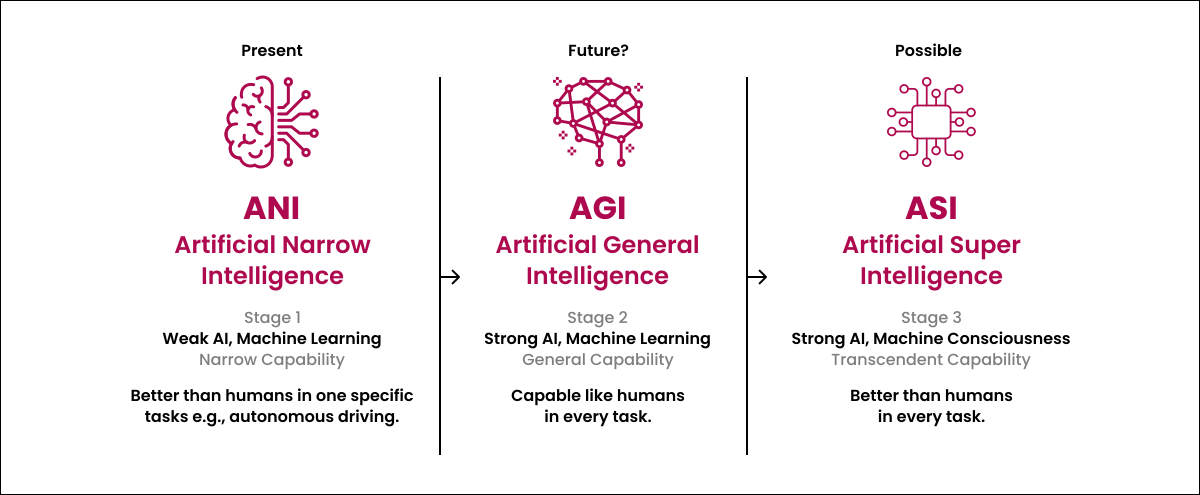
Read More about AGI Here